News

alice tang
Source:
Forbes
December 4, 2025

Alice Tang is using AI computational tools to understand and diagnose complex diseases like Alzheimer's...

atul butte
Source:
BCHSI
December 1, 2025

Introducing The Atul Butte Innovation in Biomedical Data Science Student Award in honor of the Bakar Institute's founding Director, Dr. Atul Butte. Applications are now open for this award, established to honor excellence in student projects that demonstrate innovation in biomedical research utilizing data science-driven approaches, including AI. Creative or novel use of these approaches will be a plus.

title screenshot
Source:
UCSF ARS
November 14, 2025

BCHSI researcher Rohit Vashisht, PhD, successfully trained UCSF-GPT–a 1.3 billion-parameter clinical foundation base model–in under 11 hours using UCSF’s CoreHPC infrastructure. The same process previously required eight-10 months–a 660-800 times improvement in training time. 

report image
Source:
AMIA
November 5, 2025

Congratulations to Julian Hong on 2026 FAMIA Applied Informatics Recognition Program!

nsf image
Source:
UCSF BCHSI
October 16, 2025

The U.S. National Science Foundation has announced two major advancements in America's AI infrastructure: the launch of the Integrated Data Systems and Services (NSF IDSS) program to build out national-scale data systems and the selection of 10 datasets. Two BCHSI / UCSF affiliated datasets will be integrated into the National Artificial Intelligence Research Resource (NAIRR) Pilot. The selection followed a competitive NSF-led process in partnership with an interagency group of 12 federal agencies. Read NSF news article 


Learn more below!


Microbiome dataset from the DREAM Challenge, led by the March of Dimes Prematurity Research Center at UCSF (Tomiko Oskotsky, MD, Scientific Director, March of Dimes Prematurity Research Center, UCSF and Marina Sirota, PhD, professor / BCHSI Interim Director), is one of 10 datasets selected for integration into the NAIRR Pilot.

This dataset includes >3,500 vaginal microbiome samples from ~1,300 pregnant women across multiple studies, harmonized using the MaLiAmPi tool developed by Jonathan Golob. More details on the dataset and the DREAM Challenge are available in the team’s Cell Reports Medicine publication

This dataset, along with other pregnancy-related omics datasets, is accessible through the March of Dimes Prematurity Research Data Repository (https://pretermbirthdb.org). See MOD press release The UCSF MOD team is thrilled to see this resource shared more broadly through NSF’s platform and looks forward to the future opportunities it will enable.


UCSF Industry Documents Library

BCHSI Associate Director, Knowledge Computing, [KT1] Gundolf Schenk, PhD, and team collaborated with UCSF’s Industry Documents Library (IDL) to explore how to de-identify archival documents through a tool they created called “Philter” – Protected Health Information Filter. The IDL is a digital archive containing over 25 million documents publicly released from industries which impact public health. The partnership with BCHSI has supported IDL in its efforts to identify and safeguard personal information before documents are made public. UCSF IDL is frequently used by UCSF faculty, staff, and students in public health research and is also one of the selected 10 datasets to be integrated into the NAIRR Pilot. 

nature article
Source:
Nature
October 14, 2025

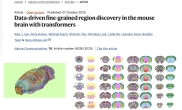
BCHSI-Affiliated faculty Reza Abasi-Asl et al publish in Nature Communications where his lab introduces CellTransformer, an AI model that creates a fine-grained map of the brain with unprecedented scale and detail. Abasi-Asl shares, "Modern biology is generating massive datasets, but a key bottleneck has been our inability to analyze them. To tackle this challenge, we designed a transformer-based AI system called CellTransformer. By applying this model to one of the largest spatial transcriptomics datasets ever created, the Allen Brain Cell-Mouse Whole Brain Atlas, we reproduced known brain regions with high accuracy while also identifying previously uncataloged, finer-grained subregions.

This work moves us beyond the limitations of traditional, hand-drawn anatomical maps and provides a scalable, unbiased way to understand tissue organization." 

skin image
Source:
Journal of Dermatological Treatment
October 6, 2025

Remote monitoring of disease activity has the potential to improve research and clinical care in dermatology, but validated tools are lacking. Scientists at BCHSI/Center for Real World Evidence (CRWE) recently partnered with the Department of Dermatology to develop and test a new tool for patient guided capture of eczema disease activity using a new mobile app, ‘Skintracker’. The BCHSI team helped de-identify and annotate images.

BCHSI Data Scientists Gundolf Schenk and Hunter Mills helped with the de-identification of the tabulated patient study data and the body/dermatology photos. Annotator Julie Hillpot from the UCSF Industry Document Library marked and obscured any identifying information on the picturess. De-identifying photos of the skin that were taken by patients using the Skintracker app was a key step to make the data usable for downstream research, which aims to automate the scoring of atopic dermatitis severity. This has the potential to improve clinical trial efficiency (ability to remotely monitor patient outcomes), as well as more precise monitoring in clinical practice. This CRWE project funded by Janssen. Read paper

jama logo
Source:
JAMA Open Network
October 3, 2025

When Marina Sirota, PhD, first saw Atul Butte, MD, PhD, speak on the Stanford campus 20 years ago, she recalls being “blown away” by his ideas and enthusiasm. “He was proposing to use free public data to impact patients’ lives,” Sirota said in a recent interview.

J stage logo
Source:
Japan Society for Higher Brain Function Research
September 29, 2025

BCHSI affiliated faculty Pedro Pinheiro-Chagas and co-authors Yu-Wen Cheng, Maria Luisa Gorno-Tempini, Boon Lead Tee publish their first AI-Human paper "Redefining language and neurodegeneration through PPA: Clinical phenotypes, network vulnerability, and global research directions" Higher Brain Function Research, 45(3), 159–175. Japan Society for Higher Brain Function. 
 

This article was generated using the AI Scientific Writer workflow (https://github.com/pinheirochagas/AI_scientific_writer), an agentic generative AI system designed to convert Recorded Talks and Presentation Slides into a scientific manuscript (in this case an audio-recorded talk by Maria Luisa Gorno-Tempini and power-point slides from a talk by Boon Lead Tee). Following preprocessing of the source material, the system retrieves relevant literature, scaffolds citations, and refines the text through iterative review. Human co-authors provide oversight at every stage to ensure accuracy.


The next goal of this project is to develop it into a “living paper”: each week, AI agents will search the web (PubMed and preprint websites) for new findings on primary progressive aphasia, summarize potential updates, and notify co-authors for review. Approved updates will then be automatically integrated via GitHub pull requests. All the code (e.g. python scrips,  MCP servers) and all the tracing (e.g., model responses, function calls, reasoning tokens, etc will be open source). Contact Dr. Pinheiro-Chagas if you would like to collaborate or have a relevant project!
 

npj digital medicine
Source:
NPJ Digital Medicine
September 10, 2025

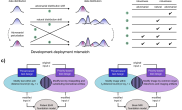
Commentary from BCHSI Affiliated faculty Reza Abbasi-Asl: "As biomedical foundation models (BFMs) become more integrated into healthcare, how can we be sure they are safe, reliable, and consistent? This is the critical question of robustness.

In our work, we reviewed over 50 existing BFMs and found a concerning gap: nearly one-third (31.4%) included no robustness assessments whatsoever. This highlights a significant risk, as failures in robustness can lead to performance degradation or even harmful outcomes when models are deployed in the real world.

To address this, we propose a new framework for testing. Instead of relying on generic or purely theoretical checks, we argue for creating task-dependent "robustness specifications." This approach involves:

1. Identifying the highest-priority failure scenarios for a specific clinical task.
2. Designing targeted tests that simulate these realistic challenges.
3. Standardizing evaluations to bridge the gap between abstract AI regulations and concrete implementation.

We believe this priority-based approach is essential for building trust and ensuring the safe, effective use of AI in medicine. It’s a crucial step toward creating a standardized, reliable model lifecycle for the next generation of medical AI."